guides · October 2026
How to Inspect Your Car's Brake Lines for Rust Before Winter
Don't let rust compromise your safety this winter. Learn how to safely inspect your vehicle's brake lines for corrosion and when to call a professional.
Fixbud
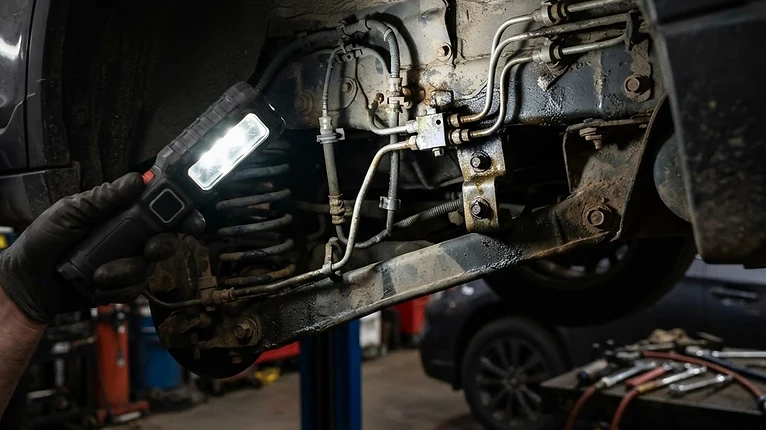
Why Brake Line Inspection Matters in Canada As the temperatures drop and municipal crews prepare to treat Canadian roads with salt and de-icing agents, vehicle owners often focus on winter tires and batteries. However, one of the most critical safety components often goes overlooked: your brake lines. In Canada, road salt is notorious for causing premature corrosion on undercarriage components. While surface rust on a frame might be manageable, rust on your brake lines is a serious safety concern that can lead to sudden brake failure. ## Understanding Brake Line Corrosion Brake lines are typically made of steel. Over time, moisture and road salt accelerate the oxidation process. Because these lines are located under the vehicle and often hidden by plastic shielding or near the frame rails, they can corrode from the inside out or in areas where salt and grime accumulate. If a line becomes too thin, the hydraulic pressure generated when you hit the brakes can cause it to burst, leading to a sudden loss of stopping power. ## How to Perform a Basic Visual Inspection You don't need a lift to perform a preliminary check, though a flashlight and a safe, level surface are essential. 1. Park on a flat, dry surface and ensure the engine is cool. 2. Use a flashlight to inspect the lines running along the undercarriage of your car. 3. Look for areas of heavy flaking, orange-red rust, or wet spots that might indicate a slow leak. 4. Check the junction points and fittings where lines connect to flexible hoses. 5. If the lines appear swollen or have deep, pitted rust, this is a major warning sign. ## When DIY Isn't Enough While checking for visual signs of damage is something every Canadian driver can do, repairing brake lines is not a beginner DIY project. Brake work involves precision, specific flaring tools, and strict adherence to safety standards. A compromised line must be replaced by a professional to ensure the hydraulic system is properly sealed and bled of air. ## Safety First: When to See a Professional If you see signs of heavy corrosion, leaking fluid, or if your brake pedal feels 'spongy,' do not attempt to drive the vehicle or perform the repair yourself. This is a critical safety issue that requires immediate attention from a qualified automotive repair shop. ## How Fixbud Can Help If you notice suspicious rust or are worried about the condition of your undercarriage, Fixbud helps you understand exactly what you are looking at. By starting with a photo-based assessment, you can get a better sense of whether you are looking at minor surface rust that needs preventive treatment or significant damage that requires a professional mechanic. Fixbud provides the clarity you need to make informed decisions about your vehicle's safety. ## Conclusion Don't wait for your first snowstorm to discover a problem with your brakes. A quick inspection today can save you from a dangerous situation later this winter. When in doubt, have a professional take a closer look. Ready to get a better understanding of your car's condition? Start your Fixbud assessment today.
Wondering if your own repair is DIY-friendly? Start a Fixbud assessment — snap a photo or describe the damage and get an honest, personalized repair guide in seconds.
Comments
No comments yet — be the first.
Leave a comment
Comments are reviewed by an admin before they appear.