How to Inspect Your Car's Coolant System: A Fall Maintenance Guide for Canadians
Don't let a failing cooling system leave you stranded this winter. Learn how to inspect your coolant levels and hoses for reliable Canadian fall driving.
The Importance of Your Cooling System in Autumn
As temperatures drop across Canada, many drivers focus solely on tires or batteries. However, your engine's cooling system is equally vital during the transition to fall and winter. A properly functioning cooling system doesn't just prevent your engine from overheating in the summer; it is responsible for the heat that keeps you warm in the cabin during those frigid Canadian commutes. If your coolant is old, low, or the system has a leak, you risk engine damage or a heater that blows nothing but cold air when you need it most.
How to Check Your Coolant Level
Checking your coolant is a relatively simple task that every driver can perform. Follow these steps:
- Safety First: Only check your coolant when the engine is completely cold. Never open the radiator cap or reservoir cap while the engine is hot, as the system is under pressure and can cause severe burns.
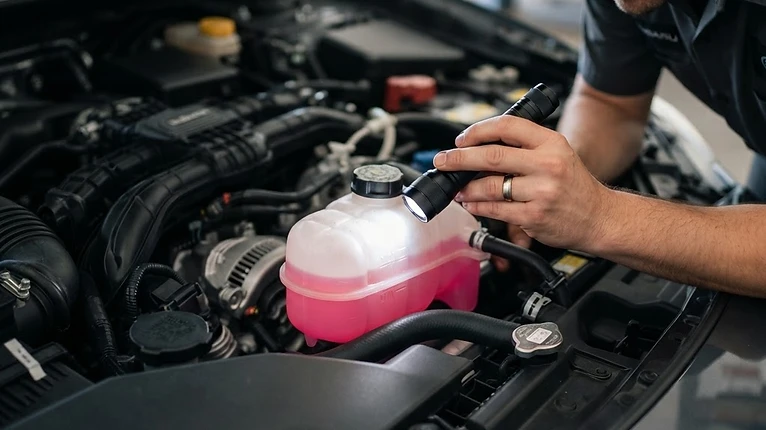
- Locate the Reservoir: Look for the translucent plastic tank connected to the radiator. Most vehicles have a 'Full' and 'Low' mark on the side of the tank.
- Inspect the Color: While you look at the level, observe the fluid. Healthy coolant should be vibrant (usually green, orange, or pink). If the liquid appears rusty, cloudy, or contains particles, it may be time for a system flush.
- Check the Hoses: Inspect the large rubber hoses leading to and from the radiator. Look for cracks, bulges, or signs of leaking fluid around the clamps.
When is DIY Appropriate?
Checking fluid levels and identifying obvious hose damage are tasks well-suited for a DIY approach. However, if you find a leak, notice a persistent smell of 'sweet' syrup, or see steam, the issue likely involves the water pump, radiator, or internal gaskets. These are complex repairs that require specialized equipment and diagnostic expertise.
Why Professional Expertise Matters
Coolant systems are pressurized and environmentally sensitive. Improper disposal of old coolant is a significant hazard, and air pockets trapped in the system after a refill can lead to catastrophic engine failure. If your inspection reveals more than just a low reservoir, it is far safer and more cost-effective in the long run to consult a professional shop. They can perform a pressure test to find hidden leaks that you might miss.
The Fixbud Advantage
Not sure if your cooling system requires a simple top-up or a professional inspection? Fixbud helps you bridge the gap. By providing photos of your specific engine bay or signs of leaks to the platform, you can get a clearer understanding of the issue. Fixbud helps you distinguish between basic maintenance that you can handle safely at home and problems that require the expertise of a local Canadian repair shop. We aim to guide you to the right solution before you end up stuck on the side of the road.
Conclusion
Taking fifteen minutes this fall to inspect your coolant system can save you from a major headache once the first frost hits. Keep an eye on your levels, inspect your hoses, and don't hesitate to seek professional help if the problem looks beyond your comfort zone.
Ready to get started?
Start your Fixbud assessment to see if your cooling system needs attention today.
Wondering if your own repair is DIY-friendly? Start a Fixbud assessment — snap a photo or describe the damage and get an honest, personalized repair guide in seconds.
Comments
No comments yet — be the first.
Comments are reviewed by an admin before they appear.