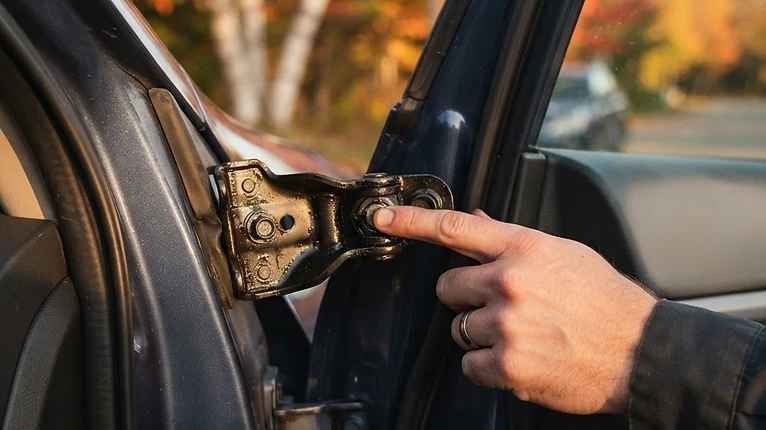
How to Inspect Your Car's Door Hinges and Latches Before Winter
Don't get stranded by a stuck door this winter. Learn how to inspect, clean, and lubricate your car's door hinges and latches for the Canadian cold.
The Hidden Struggle of Canadian Winters
There is nothing quite as frustrating as pulling on your car handle during a freezing Canadian morning, only to find the door is frozen solid—or worse, won't latch shut once you finally get inside. As the temperatures drop, your vehicle's door hinges and latches become prime candidates for seizing up.
Before the deep freeze sets in, a few minutes of preventative care can save you from a major headache (and potentially damaging your door seals) when the mercury hits -20°C.
Why Your Door Hinges Need Attention Now
During the fall, debris, dust, and leftover road grime from summer settle into your vehicle’s hinge mechanisms. When the first frost arrives, this moisture freezes, acting like a glue. Over time, lack of lubrication increases friction, which puts unnecessary strain on the latch mechanism and the electronic components within your door handle assembly.
A Simple Inspection Routine
- Clean the Area: Use a soft brush or compressed air to clear away leaves and grit from the hinge pivot points and the door latch mechanism on the edge of the door.
- Test the Movement: Open and close your doors several times. Listen for creaks or resistance. If the door feels 'heavy' or makes a metallic groaning sound, it is crying out for lubrication.
- Inspect for Rust: If you notice orange surface rust on the hinge pins, address it now with a light wire brush before it turns into a structural issue that requires professional body shop attention.
- Check the Weatherstripping: While you are there, inspect the rubber seals around the door. If they are brittle or cracked, the salt and moisture from winter slush will find their way into the cabin or the internal door mechanisms.
When to Seek Professional Help
While cleaning and lubricating hinges is a perfect DIY task, there are times you should put the tools down:
- Door Alignment Issues: If the door sags or doesn't sit flush with the body, don't try to force it. This requires professional tools to adjust the striker or hinges without damaging the paint.
- Electrical Faults: If your door locks are intermittent or the key fob isn't communicating, you likely have a failing actuator, which is a complex repair involving door panel removal.
- Excessive Rust: If the metal around the hinge mounting point is flaking or soft, this is a safety issue that needs a professional body shop evaluation.
Fixbud: Simplifying Your Fall Maintenance
Not sure if those creaky hinges just need a spray of white lithium grease or if you have a deeper alignment problem? Fixbud helps you bridge that gap. By uploading a photo of your hinge or latch, Fixbud can help you identify the level of wear and provide a personalized guide for your specific vehicle make and model. We focus on verified procedures so you can feel confident whether you’re tackling the job in your driveway or deciding it’s time to head to a local shop.
Conclusion
A small bit of maintenance in October pays dividends in January. By taking the time to inspect your hinges and latches now, you ensure that your vehicle remains functional and safe throughout the harsh Canadian winter.
Start your Fixbud assessment today to see if your door hinges need attention.
Wondering if your own repair is DIY-friendly? Start a Fixbud assessment — snap a photo or describe the damage and get an honest, personalized repair guide in seconds.
Comments
No comments yet — be the first.
Comments are reviewed by an admin before they appear.