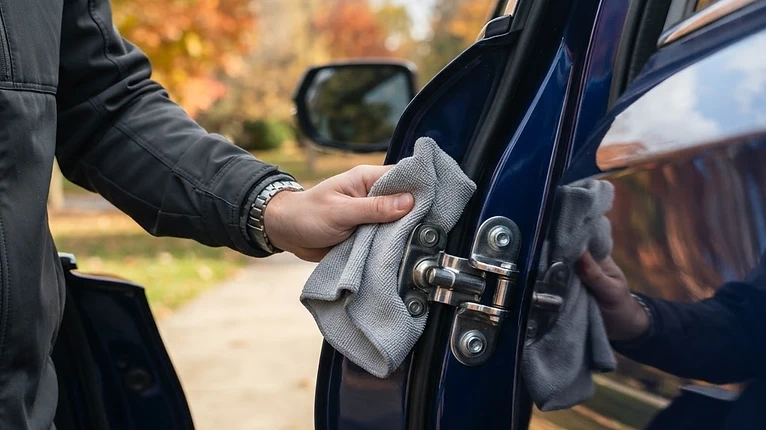
How to Inspect Your Car's Door Latches and Hinges for Fall
Don't let your doors freeze shut this winter. Learn how to inspect and lubricate your car's hinges and latches before the Canadian cold arrives.
The Importance of Pre-Winter Door Maintenance
If you have ever walked out to your car on a frigid January morning in Canada, only to find the door frozen shut, you know the frustration. It isn't just an annoyance; it can be a safety issue if you are in a rush. Before the deep freeze sets in, a few minutes spent inspecting your vehicle’s door hinges and latch mechanisms can save you from a locked-out situation later this season.
Why Fall is the Best Time for Inspection
During the summer months, dust, dirt, and road grime accumulate in the hinges and latches. When this debris mixes with moisture during the rainy fall season and then freezes in winter, it can cause components to bind or stick. By cleaning and lubricating these parts now, you ensure smooth operation and prevent corrosion caused by road salt.
How to Inspect Your Door Components
Follow these steps to check your vehicle's entry points:
- Visual Check: Open each door and inspect the hinges for built-up gunk or rust. Check the metal latch mechanism on the edge of the door for any signs of wear.
- Test Operation: Open and close each door fully. It should move smoothly without any creaking, groaning, or resistance.
- Inspect the Seals: Look at the rubber weatherstripping around the door frame. If it feels brittle or is cracking, it may need to be cleaned and treated to prevent it from sticking to the door when it freezes.
Proper Lubrication Techniques
If you hear a squeak or notice resistance, it is time for a little maintenance:
- Clean First: Use a soft cloth to wipe away old grease and debris from the hinge pins and the latch.
- Use the Right Product: Use a high-quality white lithium grease for hinges, which stays in place and resists water. For the lock cylinders and the interior of the latch mechanism, a silicone-based spray is often preferred to keep components moving freely without attracting excessive dust.
- Less is More: You don't need a heavy coat of grease. A small, targeted amount is usually sufficient to keep things moving smoothly.
When to Seek Professional Help
While lubrication is a standard DIY task, some door issues require professional intervention. If you notice the door is sagging, won't latch properly, or if the interior handle feels disconnected, do not force it. These signs may indicate a worn-out hinge pin or a failed actuator, which are best addressed by a qualified technician to avoid damaging the bodywork or the locking system.
How Fixbud Can Help
Not sure if your door's issues are just a lack of lubrication or something deeper? Fixbud is building toward a more connected future where you can easily diagnose these minor mechanical concerns. By starting a personalized assessment, you can get clear instructions on what you can safely handle at home versus when it's time to visit a professional repair shop.
Conclusion
Spending a little time on your car’s hinges now will pay off when the snow starts falling. Keeping these components clean and lubricated is a simple but vital part of your autumn vehicle maintenance routine.
Ready to get your car ready for winter? Start your Fixbud assessment to identify any other maintenance tasks you might be missing before the cold hits.
Wondering if your own repair is DIY-friendly? Start a Fixbud assessment — snap a photo or describe the damage and get an honest, personalized repair guide in seconds.
Comments
No comments yet — be the first.
Comments are reviewed by an admin before they appear.