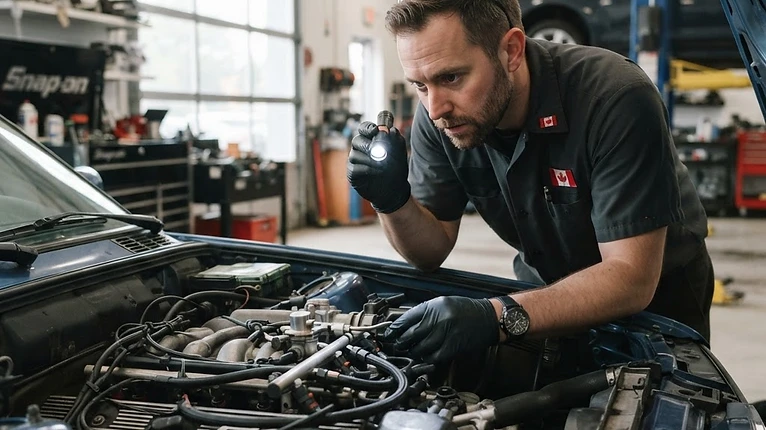
How to Inspect Your Car's Fuel System Before Winter: A Canadian Guide
Prepare your vehicle for the cold. Learn how to inspect your car's fuel system for winter, understand potential issues, and when to see a pro.
The Importance of Fuel System Health in Cold Weather
When the mercury drops in Canada, your car’s fuel system faces unique challenges. Condensation can form in a partially empty gas tank, leading to moisture buildup that can freeze in your fuel lines or contribute to internal corrosion. If your engine is sputtering, hard to start, or running rough as the temperature dips, your fuel system may be the culprit.
Why Your Fuel System Matters Before Winter
Unlike an oil change, the fuel system is often overlooked until a vehicle refuses to start on a -20°C morning. Cold temperatures can thicken fuel and expose weaknesses in your fuel pump or filter, making it crucial to ensure everything is in optimal working order before the snow settles.
What You Can Check Yourself
While complex fuel injection diagnostics usually require a professional, you can monitor several signs that your fuel system needs attention:
- Listen for the Pump: When you turn your key to the 'on' position (but don't start the engine), listen for a faint, high-pitched hum for 2-3 seconds. That is your fuel pump priming. If you hear silence or an unusual grinding noise, it may indicate a failing pump.
- Check for Fuel Odors: Smell around your vehicle for the scent of raw gasoline. If you detect it, stop driving immediately and have a professional inspect the lines for leaks.
- Watch Your Gauge: Erratic fuel gauge readings can sometimes point to a failing fuel level sending unit located inside the tank, which requires professional mechanical intervention.
- Monitor Fuel Economy: A sudden drop in fuel efficiency can be a symptom of a clogged fuel filter or a struggling pump.
When to Seek Professional Help
Fuel systems involve pressurized lines and flammable liquids, making them a high-risk area for DIY repairs. You should always consult a professional if:
- You suspect a fuel leak.
- You notice persistent engine misfires or stalling.
- You need to replace a fuel pump or filter, as these require specific safety equipment and pressure-release procedures.
The Fixbud Approach: Understanding Your Repair Needs
Not sure if those engine symptoms point to the fuel system or something else entirely? Fixbud helps you bridge the gap between noticing a problem and knowing the right next step. By starting with a photo or a description of your vehicle's behavior, Fixbud provides clear, verified guidance on whether you are dealing with a routine maintenance item or a repair that requires an experienced mechanic.
Conclusion
Preparing your car for winter is about more than just tires and batteries; it’s about ensuring the systems that keep your engine running are ready for the extreme Canadian climate. By paying attention to how your car performs now, you can avoid being left stranded when the real cold arrives.
Ready to check your vehicle's health?
Start your Fixbud assessment to identify and understand your vehicle's repair needs today.
Wondering if your own repair is DIY-friendly? Start a Fixbud assessment — snap a photo or describe the damage and get an honest, personalized repair guide in seconds.
Comments
No comments yet — be the first.
Comments are reviewed by an admin before they appear.