guides · November 2026
How to Inspect Your Car's Spark Plugs: A Fall Performance Guide
Prepare your engine for Canadian winter. Learn how to inspect your spark plugs for signs of wear and understand when it is time for a professional replacement.
Fixbud
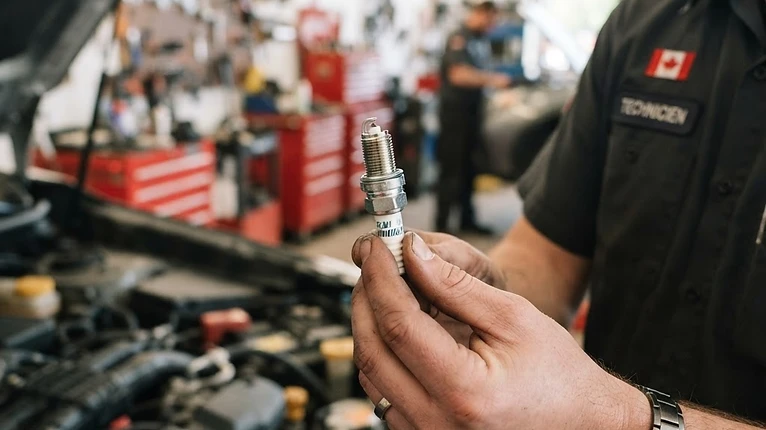
Is Your Engine Ready for the Cold? As temperatures drop across Canada, your vehicle’s engine works harder to start and maintain optimal performance. While many drivers focus on tires and batteries, one of the most overlooked components for cold-weather reliability is the spark plug. If you have noticed rough idling, sluggish acceleration, or a drop in fuel economy, your ignition system may be trying to tell you something. ## Why Spark Plugs Matter in Canadian Winters A healthy spark plug creates the necessary electrical arc to ignite the fuel-air mixture in your engine’s combustion chamber. In freezing temperatures, the engine requires a precise and powerful spark to turn over reliably. Worn-out plugs with wide gaps or heavy carbon deposits can lead to 'hard starting'—that dreaded moment when you turn the key or press the start button on a frigid morning and the engine just cranks. ## How to Inspect Your Spark Plugs While you don't need to check these weekly, inspecting them during your fall maintenance routine can save you from a breakdown. 1. Access the plugs: Depending on your engine layout, this may require removing a plastic engine cover or moving ignition coils. 2. Remove carefully: Always use the correct spark plug socket and ensure the engine is cool to avoid damaging the cylinder head threads. 3. Check for wear: Inspect the center electrode for rounding or erosion. A healthy plug has sharp, clean edges. 4. Observe color: A light tan or gray color is normal. Black soot indicates a rich fuel mixture, while heavy oil deposits suggest internal engine wear. ## Safety and Professional Intervention Spark plug replacement varies significantly by vehicle. Modern vehicles, particularly those with direct injection or high-performance turbocharged engines, can have complex ignition systems that are easily damaged during service. When to seek help: If you encounter resistance when removing a plug, if your vehicle uses complex coil-on-plug systems that you are uncomfortable navigating, or if you suspect deeper engine issues like oil burning, it is always safer to consult a professional. Attempting to force a seized plug can result in expensive repairs to the cylinder head. ## The Fixbud Approach: Understanding Your Ignition System Not sure if your engine's performance issues are spark plug-related or something more complex? Fixbud helps you cut through the confusion. By starting with an assessment, we help you understand the symptoms you're experiencing and determine whether this is a manageable DIY task for your specific vehicle model or a job that requires a professional mechanic’s tools and expertise. Our goal is to ensure you aren't just guessing when it comes to your engine’s health. ## Conclusion Proper ignition maintenance is an investment in your vehicle’s longevity. By inspecting your spark plugs now, you can address minor performance issues before they become winter-morning headaches. Take the time to understand your vehicle's needs, and you'll find that your car runs smoother and more reliably through the coldest months of the year.
Wondering if your own repair is DIY-friendly? Start a Fixbud assessment — snap a photo or describe the damage and get an honest, personalized repair guide in seconds.
Comments
No comments yet — be the first.
Leave a comment
Comments are reviewed by an admin before they appear.