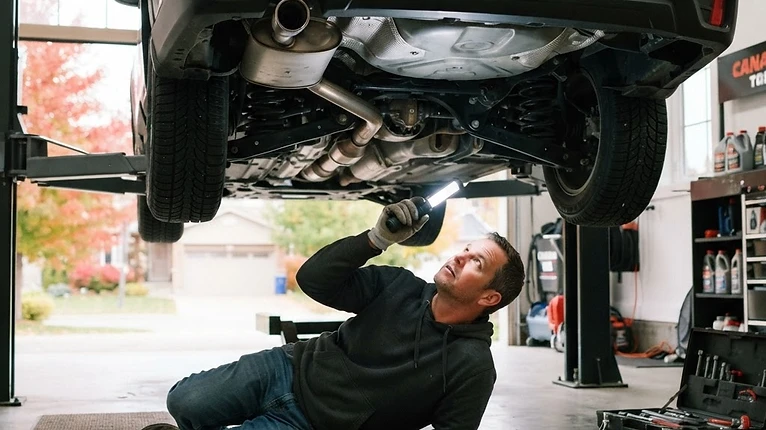
How to Properly Inspect Your Car's Exhaust System Before Winter
Don't let a faulty exhaust system ruin your winter. Learn how Canadian drivers can inspect their vehicles for rust, leaks, and damage before the first snowfall.
Heading into the Cold: Why Your Exhaust System Matters
As the temperature drops and we transition into the heart of a Canadian fall, we often focus on tires, batteries, and cooling systems. However, one component that frequently gets overlooked until it is too late is your vehicle's exhaust system. With road salt and moisture being the primary enemies of metal, the fall is the perfect time to give your exhaust a closer look.
An exhaust system does much more than keep your car quiet. It is responsible for channeling harmful emissions away from the cabin and ensuring your engine runs at peak efficiency. If you've noticed a new rattle, a deeper rumble, or a lingering smell of exhaust inside your vehicle, these are red flags that should not be ignored.
Why Canadian Winters Are Tough on Exhausts
In Canada, our exhaust systems live a hard life. The combination of intense heat from the engine and sub-zero temperatures outside creates a cycle of expansion and contraction. When you add road salt (magnesium or calcium chloride) into the mix, you create a recipe for accelerated rust and corrosion.
What to Look for During a DIY Inspection
While you don't need a lift to perform a basic "pre-winter" check, you should prioritize safety. Never touch the exhaust system while it is hot; wait for the engine to cool completely before inspecting.
- Visible Rust and Holes: Use a flashlight to look along the underside of the vehicle. Focus on the muffler, the resonator, and the flanges where pipes connect. Flaking metal or visible perforations are signs of structural compromise.
- Hanging Brackets: Look for rubber hangers that look cracked, dry-rotted, or disconnected. A loose pipe will vibrate against the frame, eventually causing a break.
- Evidence of Soot: Black, powdery residue around a joint or a pipe section often indicates an exhaust leak. This is a sign that gases are escaping before they reach the tailpipe.
- Excessive Noise: If your car sounds significantly louder than it did last month, you likely have a leak or a failing muffler component.
When is DIY Appropriate?
If you find a loose rubber hanger, this is often a straightforward, low-cost DIY fix. However, if you discover heavy rust on the catalytic converter, persistent leaks near the engine manifold, or structural rot along the primary exhaust pipes, it is time to seek professional help. Welding, heavy metal repair, and emissions-related components require specialized tools and, in many cases, provincial compliance certifications.
The Fixbud Advantage
Not every exhaust noise indicates a major failure, but it is rarely a good idea to guess. If you are unsure whether you are looking at surface-level oxidation or dangerous structural rust, Fixbud can help. By capturing a clear image of the area in question, you can utilize our guided assessment process to better understand the severity of the damage.
Fixbud helps bridge the gap between curiosity and action, providing you with clarity before you visit a parts store or book an appointment with a local mechanic. We aim to help Canadian drivers distinguish between minor, safe-to-fix issues and repairs that require the expertise of a professional workshop.
Conclusion
Taking twenty minutes to inspect your exhaust system now can save you from a loud, uncomfortable, or potentially unsafe driving experience mid-winter. Whether you discover a simple fix you can handle on a Saturday afternoon or realize you need to schedule a visit with your local shop, knowing the condition of your vehicle is the best way to stay ahead of the weather.
Ready to see what your vehicle needs?
Start your Fixbud assessment today to understand your vehicle's health before the first snow flies.
Wondering if your own repair is DIY-friendly? Start a Fixbud assessment — snap a photo or describe the damage and get an honest, personalized repair guide in seconds.
Comments
No comments yet — be the first.
Comments are reviewed by an admin before they appear.