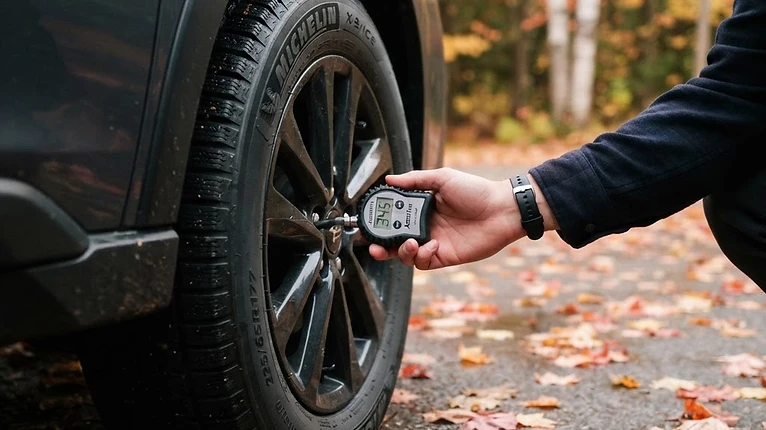
Is Your Car Ready for Winter? Why You Need to Check Your Tire Pressure Now
As temperatures drop in Canada, so does your tire pressure. Learn how to maintain your tires for safety and fuel efficiency this fall with these expert tips.
The Hidden Danger of Dropping Temperatures
When the first crisp, cool morning arrives in Canada, you might notice your tire pressure monitoring system (TPMS) light flicker to life. It isn’t necessarily a puncture; it’s physics. For every 10-degree Celsius drop in temperature, your tire pressure can decrease by about 1 PSI. In a Canadian autumn, those temperature swings can be significant, leaving your tires under-inflated and your vehicle less safe on the road.
Why Tire Pressure Matters in Fall
Maintaining proper inflation isn't just about avoiding a flat. It is central to your vehicle's performance during the transition to winter.
- Safety and Handling: Under-inflated tires have more contact with the road, leading to increased friction and heat buildup. This can cause the rubber to wear prematurely and unevenly, affecting how your car steers and stops on wet, leaf-covered, or frost-slicked roads.
- Fuel Efficiency: Rolling resistance increases when tires are soft. This forces your engine to work harder, which translates directly into higher fuel consumption at the pump.
- The Winter Setup: If you are preparing to switch to winter tires, monitoring your current setup ensures you aren't masking other suspension or alignment issues that could become more pronounced in icy conditions.
How to Properly Check Your Tires
Many drivers rely on the "eyeball test," which is rarely accurate. To keep your vehicle in top shape:
- Check when cold: Always check pressure first thing in the morning before driving. Once you drive, the friction warms the air inside, giving you a false, higher reading.
- Use the door jamb sticker: Do not use the maximum PSI listed on the tire sidewall. The correct specification for your specific vehicle is found on the sticker inside your driver-side door jamb.
- Don't forget the spare: If your vehicle has a spare, check it periodically. Nothing is worse than needing it during a cold November roadside emergency only to find it flat.
When to Seek Professional Help
While monitoring pressure is a routine DIY task, some issues require an expert. If you find one tire consistently loses pressure faster than others, you likely have a slow leak caused by a nail, a faulty valve stem, or even a damaged rim. In these cases, it is safer to have a local tire shop inspect the tire for structural integrity rather than continuing to top it off yourself.
The Fixbud Connection
At Fixbud, we understand that vehicle maintenance can feel like a series of small, nagging tasks that easily get pushed to the weekend. We are building toward a future where your vehicle maintenance needs—from routine checks to finding a local shop for a tire repair or mounting new winter rubber—are connected through one seamless, reliable platform. If you aren't sure if your tire issue is a simple pressure adjustment or a sign of deeper trouble, you can start a digital assessment with us to get personalized guidance before you spend money on unnecessary products or service appointments.
Conclusion
Taking ten minutes to check your tire pressure this weekend can save you money and keep you safer as we head into the colder months. It’s a simple, proactive step that defines the difference between reactive repairs and smart, long-term vehicle ownership.
Need to know if your tire wear is normal?
[Start your Fixbud assessment and see if your tires need professional attention.]
Wondering if your own repair is DIY-friendly? Start a Fixbud assessment — snap a photo or describe the damage and get an honest, personalized repair guide in seconds.
Comments
No comments yet — be the first.
Comments are reviewed by an admin before they appear.